
In refractory manufacturing, quality, environmental responsibility and occupational health and safety are closely connected. Every stage of production, from receiving raw materials to dispatching finished products, involves decisions that can influence product performance, employee wellbeing and environmental impact. Here at RLR we manage those responsibilities through a single Integrated Management System (IMS) built on three internationally recognised standards: ISO 9001, ISO 14001 and ISO 45001.
Certification shows that our arrangements meet recognised management system requirements. Its real value, though, lies in how those requirements shape what happens on the shop floor during a normal shift.
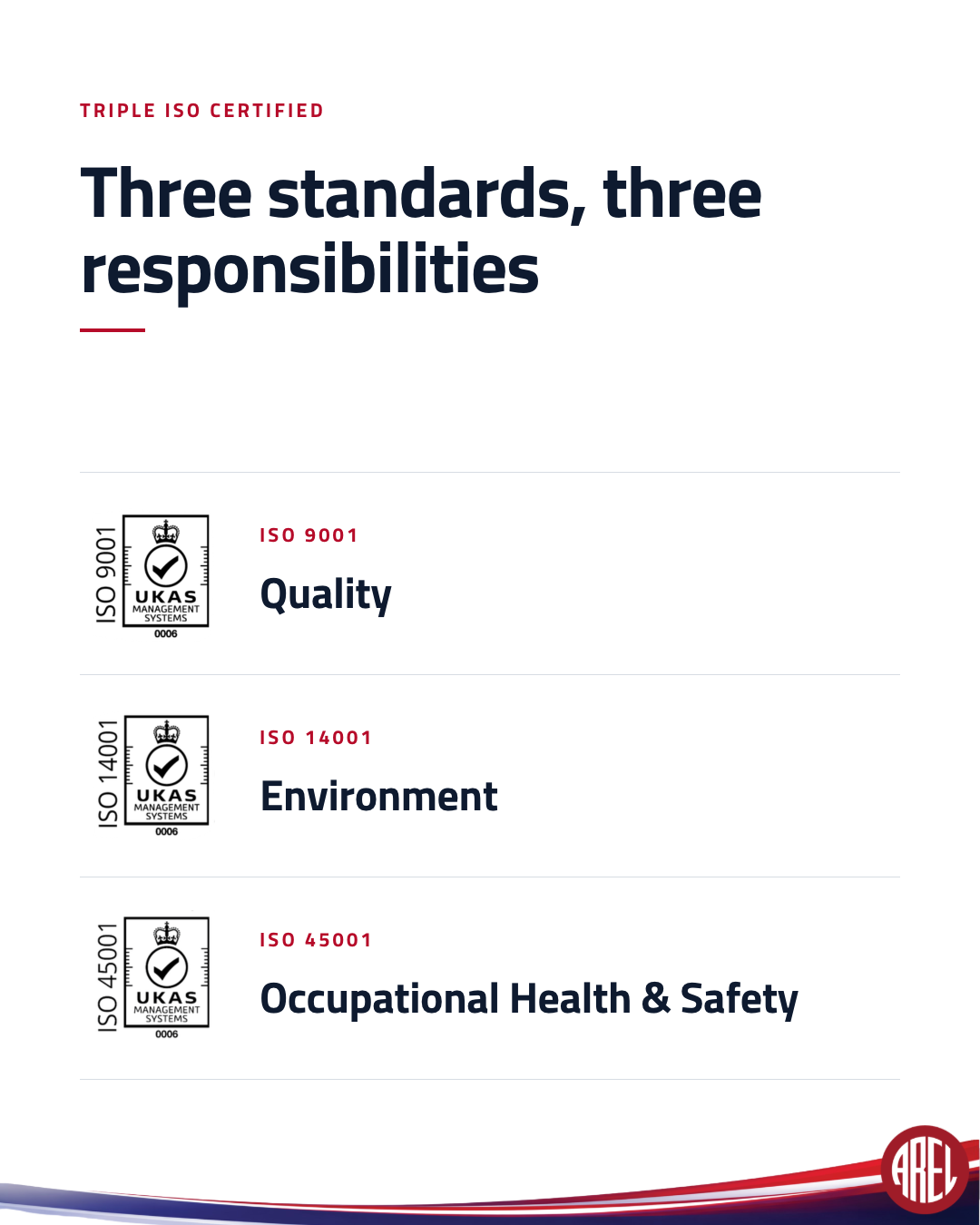
Three standards, three responsibilities
ISO 9001 sets out the requirements for a Quality Management System. It focuses on consistently meeting customers' needs, controlling manufacturing processes, maintaining product traceability and continually improving performance. For refractory manufacturing this means raw material verification, formulation controls, production records, inspection, testing and the management of non-conforming product.
ISO 14001 addresses environmental management. It requires us to identify and manage our environmental impacts, fulfil applicable compliance obligations and improve environmental performance. In practice this covers managing waste, reducing unnecessary material consumption, monitoring energy use, preventing pollution and making sure materials are handled and disposed of appropriately.
ISO 45001 sets out the requirements for an Occupational Health and Safety Management System. It focuses on identifying hazards, eliminating them where practicable, reducing workplace risks, consulting employees and continually improving health and safety performance. Together, the three standards give us one coordinated approach to quality, environmental and health and safety responsibilities.
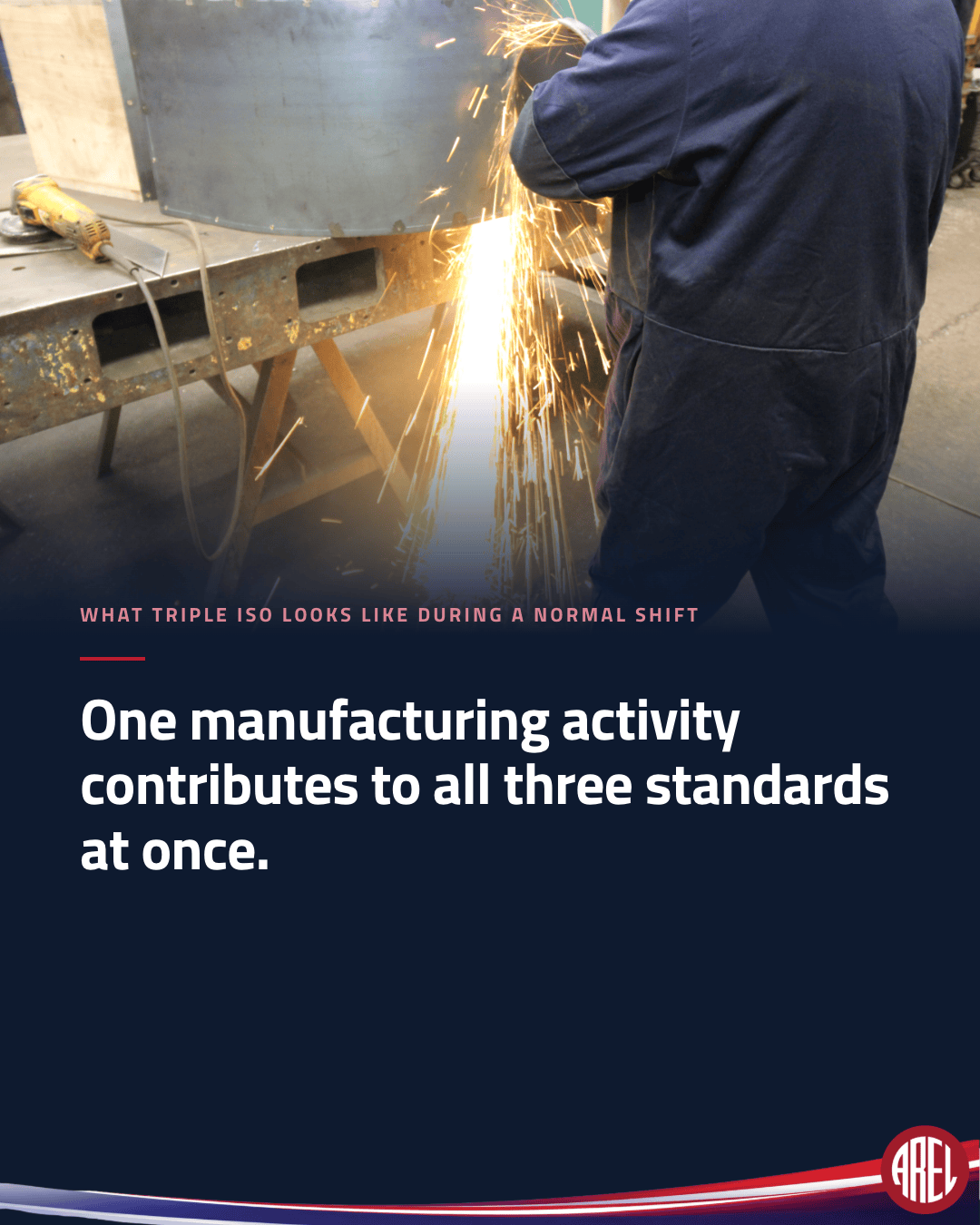
What triple ISO looks like during a normal shift
Management systems involve procedures, records and audits, but their effectiveness is demonstrated in everyday manufacturing activity. Take a production operative preparing a refractory mix. Checking the correct raw materials, following the approved formulation and recording production information supports ISO 9001 by maintaining product consistency and traceability. Handling materials efficiently, segregating waste and preventing unnecessary losses supports ISO 14001. Completing equipment checks, following safe systems of work, using local exhaust ventilation where required and reporting hazards or near misses supports ISO 45001. One manufacturing activity therefore contributes to all three standards at once.
Training and competence matter just as much. Operatives need to understand how to perform their tasks, and also the quality requirements, environmental considerations and safety precautions that go with them. Routine workplace inspections, internal audits and employee feedback tell us whether established controls remain effective. When something goes wrong, whether a product defect, an environmental incident or a near miss, the management system gives us a structured way to investigate the causes, put corrective actions in place and prevent recurrence.
Our people are not simply following procedures. Their experience and observations on the shop floor regularly identify opportunities to improve the way work is carried out, and the system is built to capture them.
Why triple ISO matters to steel customers
The steel industry operates in demanding environments where reliability, product quality, safety and environmental performance are essential. Refractory products play an important part in supporting high-temperature industrial operations, so customers need confidence that their suppliers can consistently meet technical requirements while managing the wider risks that come with manufacturing.
ISO 9001 provides independent assurance that established systems exist for managing product quality, consistency and customers' requirements.
ISO 14001 demonstrates a structured approach to identifying and controlling environmental impacts.
ISO 45001 provides assurance that occupational health and safety risks are managed through a recognised framework.
For steel producers and other industrial customers, these certifications can support supplier approval, tender evaluations, procurement assessments and ongoing supply-chain assurance. Holding all three shows that quality, environmental responsibility and occupational health and safety are managed here at RLR as connected business priorities rather than isolated activities.
What it took to add ISO 45001
Achieving ISO 45001 certification involved considerably more than introducing additional safety procedures. We had to demonstrate a systematic approach to identifying hazards, assessing risks, meeting legal obligations, consulting employees and evaluating the effectiveness of our controls. Integrating ISO 45001 alongside ISO 9001 and ISO 14001 also meant embedding health and safety considerations within the management arrangements we already had, which included reviewing risk assessments, safe systems of work, training and competence, emergency preparedness, incident reporting, workplace inspections and internal auditing.
Leadership commitment, employee participation, performance monitoring and continual improvement are central to achieving and keeping certification. The challenge is less about showing that controls have been documented and more about providing evidence that they are understood, implemented and effective throughout the organisation.
Three standards, one way of working
The value of triple ISO certification goes well beyond passing external audits. It shows in the decisions made by operatives, supervisors and managers every day: producing the right product to the required standard, managing our environmental responsibilities and carrying out the work safely. When those considerations are part of normal working practice, an Integrated Management System stops being a set of certificates and becomes part of how a responsible and reliable manufacturing business operates.
If you would like to discuss how our quality, environmental and health and safety arrangements support your supplier approval or supply-chain assurance requirements, talk to our technical team.