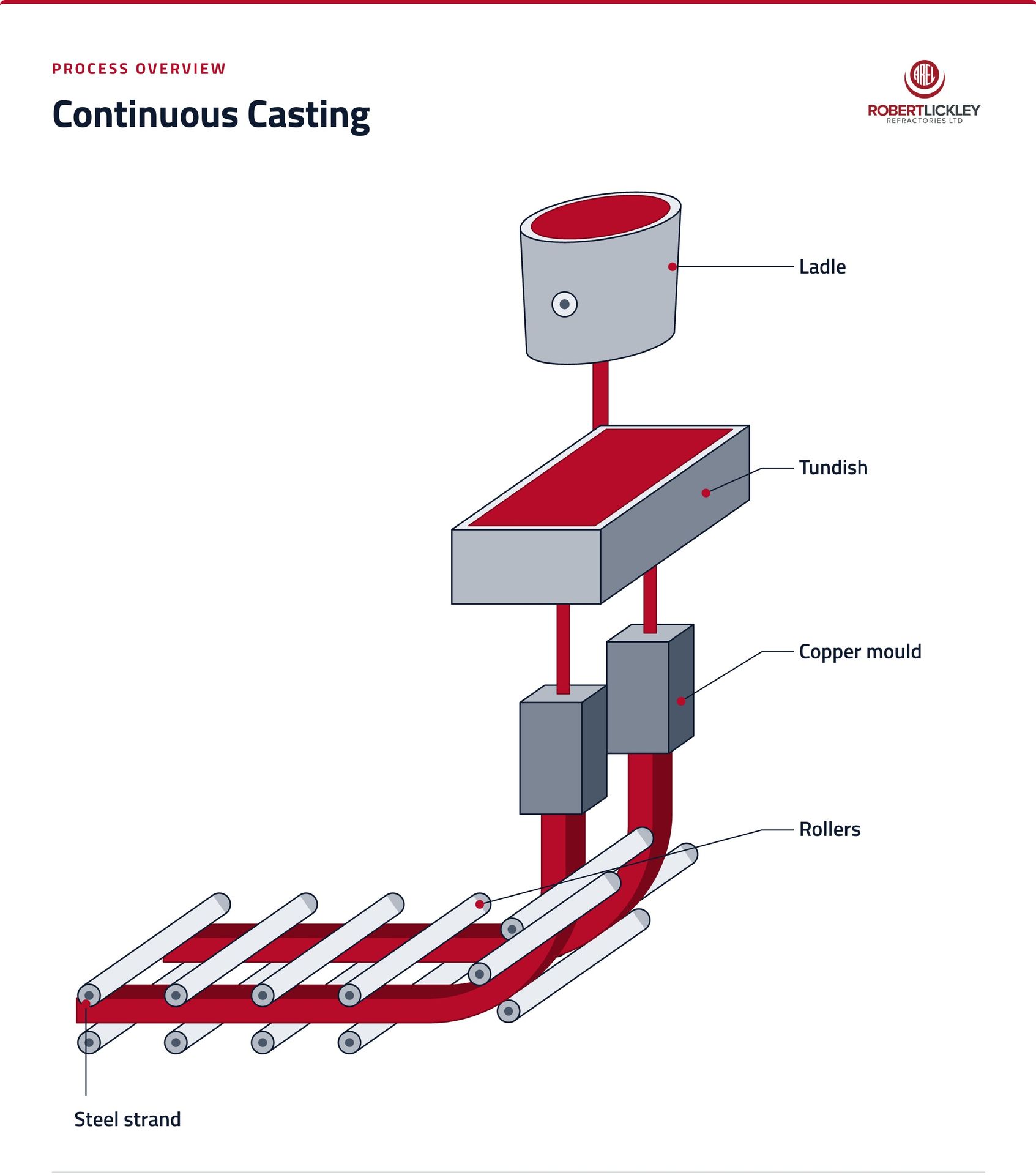
The continuous casting machine is the ultimate measure of upstream process capability in a steelmaking plant. Positioned between the ladle and the strand moulds, the tundish serves as far more than a simple distribution vessel. It acts as a critical metallurgical buffer that stabilises molten steel volume, regulates flow rates into individual moulds, attenuates turbulence, and promotes the flotation of non-metallic inclusions while maintaining thermal homogeneity across all strands. Ultimately, the execution of these critical functions depends largely on the structural integrity and chemical stability of its refractory lining.
Two Linings, Two Jobs
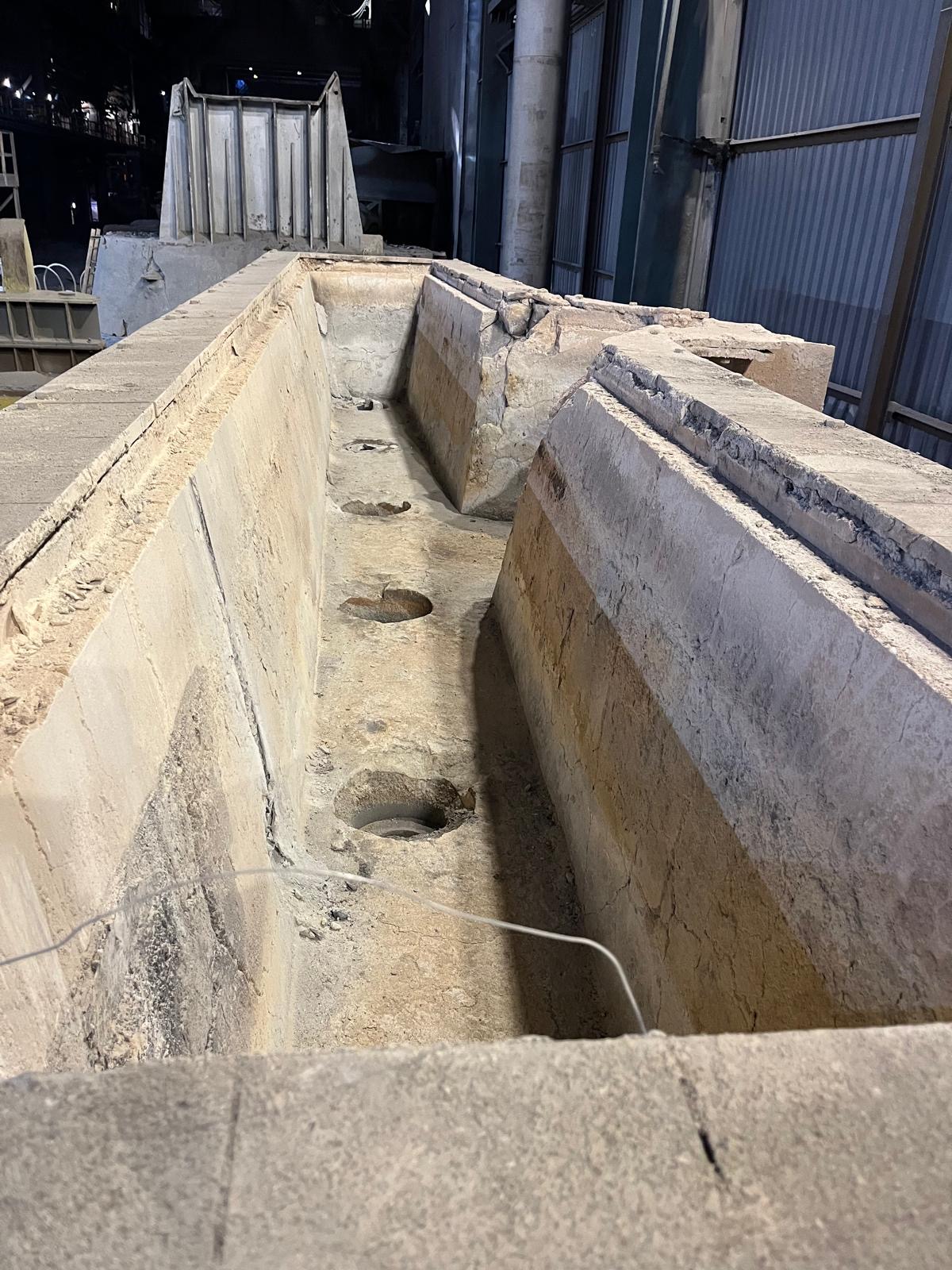
Every tundish fundamentally uses two layers of refractory linings. The permanent lining typically sits directly against the steel shell (unless insulation boards are also used) It is built from high-alumina bricks or, far more commonly, dense monolithic castables (our ArelCrete range) and it is there for thermal shock resistance and mechanical stability. It stays in place for months, typically, as a generic target, for twelve months plus with more than a thousand ladle heats. Its real job is containment. It stops the molten steel reaching the steel shell. Pour hot water into a mug made of ice and you have the picture of how a tundish steel shell needs protecting!!
The sacrificial lining (our ArelSpray and ArelVibe ranges) is the working layer. It is in direct contact with the molten steel, the slag and the cover powders, being replaced after each casting sequence. While it is in service (typically 6 - 24 hours), it protects the permanent lining from erosion, limits hydrogen pick-up and insulates the steel, to help it remain at the required casting temperature. It is the layer we spend most of our time talking to customers about, because it is the one that gets changed for every tundish cycle, being the working lining that more decides how the sequence life and steel quality progresses.
Spray or Dry Vibratable
There are two fundamental products for a sacrificial lining. Spray (ArelSpray) is a wet magnesia- based slurry. It is sprayed (via a continuous mixing & spraying machine) onto the permanent lining quickly and it can easily be built up in layers where you need more thickness (e.g. the slag-line). The main trade-off is water. The lining has to be dried out fully before casting, which takes fuel and time, and any moisture left behind (trapped in the permanent lining) can end up as hydrogen in the molten steel. However, our ArelSpray Ultra range, is designed to reduce this, by using less water and omits the drying stage to reduce fuel and time costs.
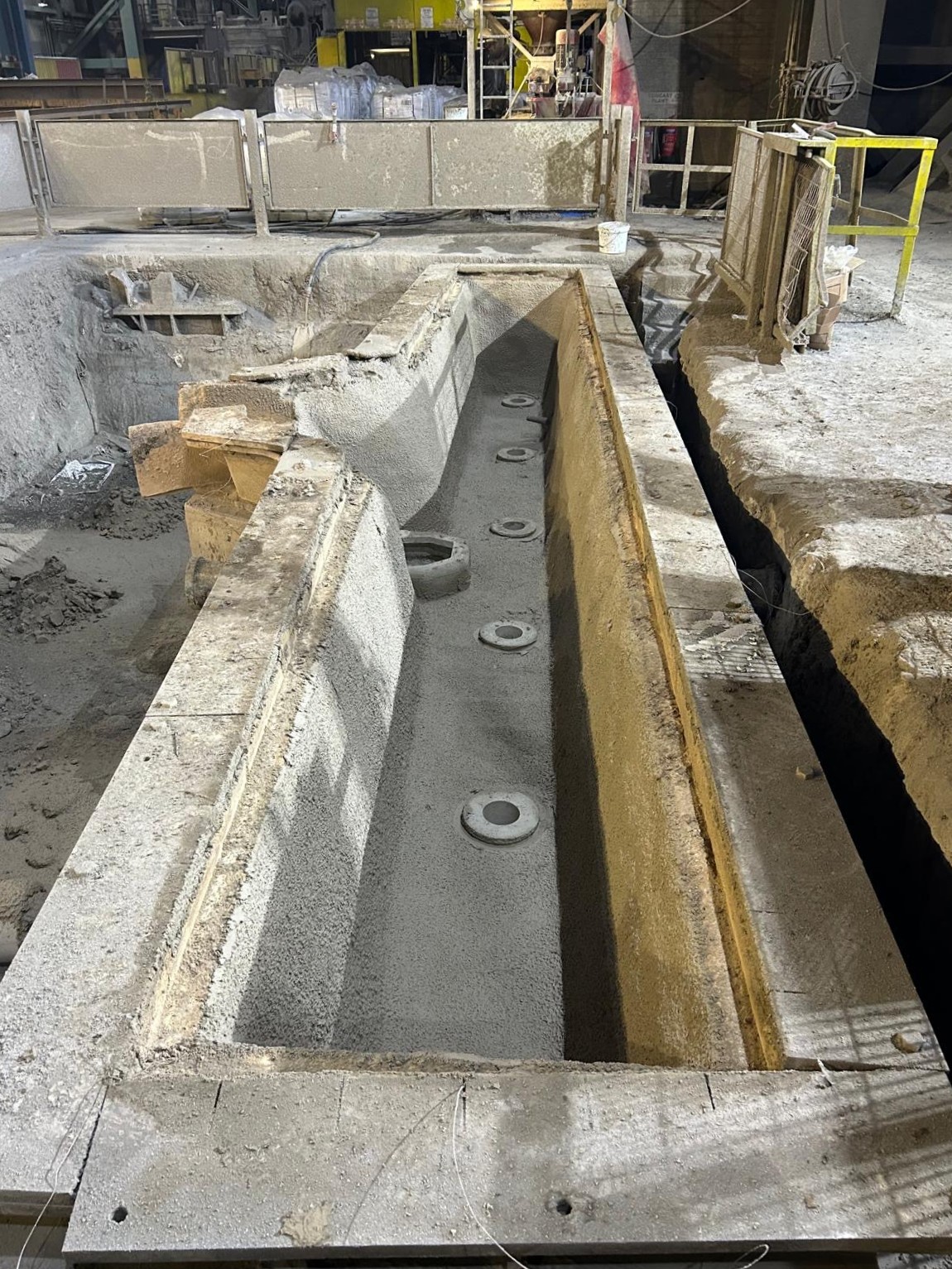
Dry Vibratable (ArelVibe) is a dry, granular magnesia-based mix, installed and often packed, around a steel former. No / negligible water goes in, so there is far less to drive out and the hydrogen risk comes down. A fixed thickness, guaranteed by the geometry of the steel former, can also give cleaner deskulling: at the end of the sequence. The skull and spent lining should tip out easily and cleanly without damage to the permanent lining. Water eradication / vast reduction of, is the main reason why DV has grown in popularity. We make both types of sacrificial lining, because both have their place depending on the customers needs...specific casting machine, the grades being cast and how the tundish lining preparations shop is preferred to be run.
Heat-Set or Cold-Set
A DV lining has to cure before it will hold its shape. Heat-Set (ArelVibe HotFlow) uses organic or inorganic binders that need heat to activate, from gas burners or from a hot former. It works well, but still requires some heat and time to cure it.. Cold-Set (ArelVibe ColdFlow) uses a chemical binder that cures at ambient temperature, or from the residual heat in a cold-started vessel. That cuts preheating fuel, takes heat off the shop floor and shortens the tundish "turn-a-round" preparation time.
What failure costs the caster
A cheap or poorly matched working lining is a bad choice. When it fails early, the damage does not stop at the tundish.
Erosion and contamination. As the lining degrades it releases inclusions straight into the steel path. The result, for example, is downgraded slabs or coils rejected at the rolling mill etc..
Breakout. Molten metal burns through the working lining and the safety lining and lands on the shop floor. That destroys the tundish car, puts the strands out of action and puts people at risk. Great safety and economic risk!
Deskulling damage. Lower-grade linings can both chemically deteriorate / sinter hard against the permanent lining. When the tundish is tilted to drop the skull, the mass can pull chunks out of the safety layer and forces an unscheduled recast.
Set against the cost of the lining itself, none of this is a saving. One lost sequence or one breakout costs more in equipment, scrapped steel and lost production than years of buying the right material.
Made in the UK
Although others supply, we are currently believed to be the only true UK manufacturer of tundish sacrificial linings. Imported refractories arrive on shipping timelines the caster does not control and are often exposed to trade shocks the caster cannot plan for. Making the working lining here at RLR, means shorter lead times, less transport, and technical support that can get to the plant, in order to immediately look at the actual casting conditions and adjust the material to suit them.
If you are reviewing your tundish practice, or you have a lining problem you have been living with, talk to our technical team.