

Tundish Refractories
Working linings, permanent linings, furniture and lids for the continuous-casting tundish, made in Dudley.
The tundish is far more than a distribution vessel. It steadies the steel, feeds every strand and lets inclusions float out, and all of that depends on its refractory lining.
Every tundish uses two layers. The permanent lining sits against the steel shell, is built from dense castables (our ARELCrete range) and stays in place for months. Its real job is containment.
The sacrificial working lining (our ARELSpray and ARELVibe ranges) is in direct contact with the steel, the slag and the cover powders, and is replaced after each casting sequence. It protects the permanent lining, limits hydrogen pick-up and helps hold the casting temperature.
We make both types of working lining, spray and dry vibratable, because both have their place: it depends on the casting machine, the grades being cast and how the tundish shop is run.
Our wet spray masses come in standard and non-drying forms: ARELSpray and ARELSpray Ultra.
Our dry vibratable comes both hot set and cold set: ARELVibe HotFlow and ARELVibe ColdFlow.
Everything in the tundish.
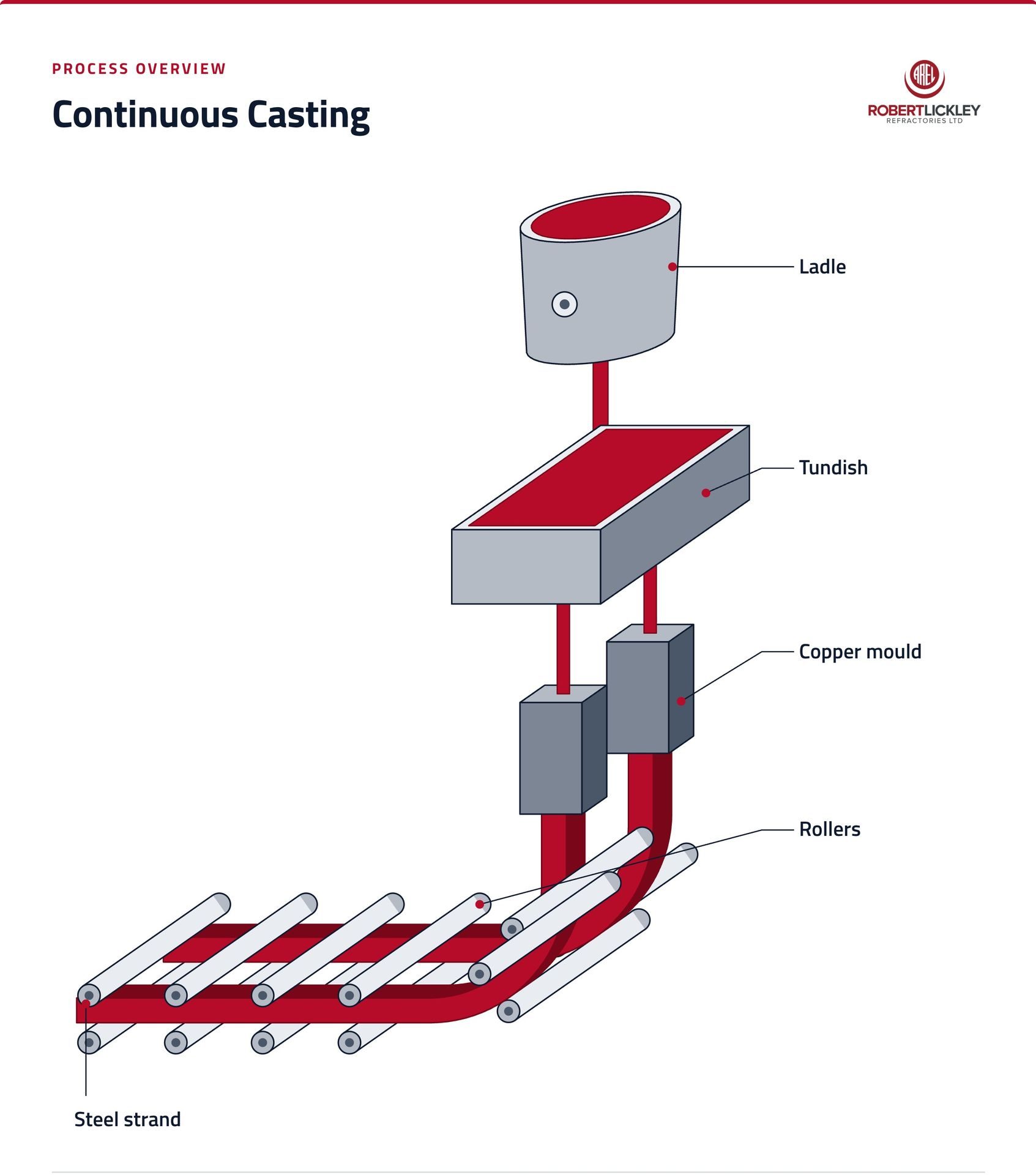
Between the ladle and the moulds.
Liquid steel is brought to the caster in ladles. The tundish distributes it to the copper moulds, and the formed strands are drawn out of the moulds by driven rollers.
Made here, supported at the plant.
Making the working lining here at RLR means shorter lead times, less transport, and technical support that can get to the plant to look at the actual casting conditions and adjust the material to suit them.
Talk to our tundish team.
If you are reviewing your tundish practice, or you have a lining problem you have been living with, talk to our technical team.
or call +44 1902 880123